


Odor
The perception of odor is highly subjective; a scent that is pleasant to one person may be offensive to another. For instance, while some enjoy the aroma of perfume, an overpowering fragrance can be unpleasant for everyone. It is said that there are more than 400,000 kinds of odor molecules, and different concentrations and mixtures can strengthen a scent or even neutralize it to make it undetectable.
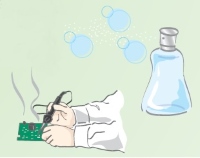
Concentration of Odorous Substances and Odor Perception
We perceive odors when inhaling volatile substances suspended in the air. The concentration of these substances is typically measured in ppm (parts per million). To visualize this unit, consider a concentration of 0.1 ppm in a room with a volume of 10 m3. The actual volume of the odorous gas would be only 1 cm3. In liquid form, this amounts to approximately 5 mg.
It is important to note that odor intensity is not linearly proportional to the concentration of the substance. Human olfactory perception generally follows the Weber-Fechner law, which states that sensory magnitude scales logarithmically with stimulus intensity.
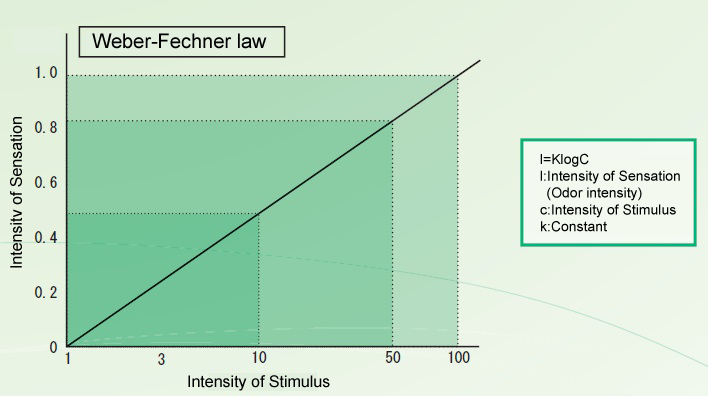
According to this principle, reducing the concentration of an odorous substance by 50% may result in only a roughly 15% decrease in perceived odor intensity. To reduce the perceived intensity by half, the concentration typically needs to be reduced by approximately 90% (depending on the specific substance).
Health Risks Associated with Hazardous Fumes and Malodors
In industrial and laboratory settings, unpleasant odors often indicate the presence of airborne contaminants such as solder fumes, volatilized resins, and organic solvents. Beyond causing discomfort, specific chemical substances can pose serious health risks. Prolonged inhalation of certain hazardous fumes may lead to organ damage (liver or kidney), anemia, or respiratory inflammation.
Continuous exposure to a persistent odor can cause olfactory fatigue, a temporary inability to distinguish a particular scent. While the nose may become desensitized, the physiological and cognitive stress caused by the presence of airborne contaminants remains. Therefore, reliance on smell alone is insufficient for safety monitoring; proper ventilation and source control are essential for both physical health and workplace productivity.

Odor Control Strategies
Given that odors can be perceived even at trace concentrations, the primary strategy is to prevent their dispersion at the source. Effective measures include containment (sealing) and maintaining a clean work environment. When complete containment is not feasible, active removal or ventilation is required.
Methods for mitigating odors are generally categorized into two processes:
- Physical Adsorption (Removal): Capturing odor-causing molecules from the air using porous materials, such as activated carbon filters.
- Chemical Neutralization (Decomposition): Breaking down or chemically altering odor molecules to render them odorless.
Odor Elimination: This is a chemical process that neutralizes or breaks down odor molecules themselves.
In workplace environments involving continuous processes like soldering or solvent use, local exhaust ventilation with filtration (adsorption) is often the most effective solution for ensuring air quality.
* Organic solvents and other substances must be controlled and used in accordance with laws and regulations, depending on the volume and type. Be sure to refer to applicable laws and regulations, as necessary.
The Role of Activated Carbon
Activated carbon is widely used for odor removal due to its high adsorption capacity. Its surface consists of a vast network of micropores (typically 10 to 200 Å in diameter), creating an immense surface area--approximately 500 to 2,500 m2/g. This structure allows a significant volume of odor molecules to be trapped physically within the carbon material.
Matsusada Precision's Fume Extraction Solutions
Matsusada Precision offers high-performance fume extractors designed to ensure safe and comfortable working environments. Our systems utilize a multi-stage filtration approach, combining high-efficiency particulate filters with specially treated activated carbon. This design effectively captures both solid particulates (such as solder smoke) and volatile organic compounds (VOCs).
Key Applications:
- Soldering fumes
- Laser marking and processing smoke
- Odors from UV printers and 3D printing resins
- Vapors from adhesives and organic solvents
For details on our lineup of compact and easy-to-integrate fume extractors, please visit the product page below.