


Regenerative Energy Basics
Regenerative energy is a technology that recovers energy usually lost during braking or deceleration and converts it back into usable electricity. It is a key technology for improving energy efficiency and reducing operating costs in industrial and transportation systems.
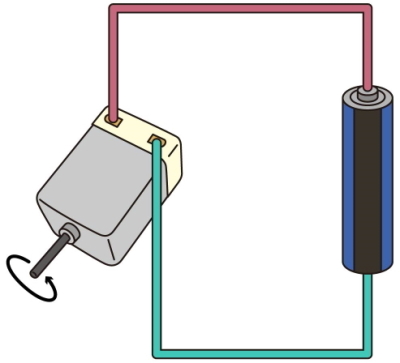
To understand how it works, we must look at the relationship between motors and generators. A motor converts electrical energy into mechanical energy to drive a load. Conversely, a generator converts mechanical energy into electrical energy. Structurally, many motors can function as generators depending on how they are driven.
Used as a Motor
Used as a Generator
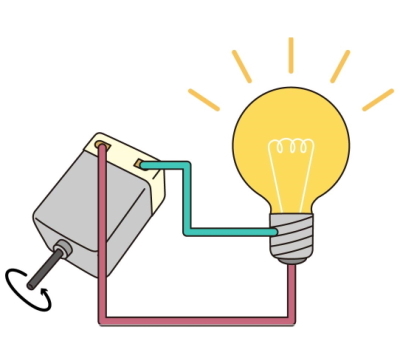
When a system, such as a train or a crane, decelerates, the motor is driven by the inertia of the moving load. During this state, the motor acts as a generator, producing electricity instead of consuming it. This recovered electricity is "regenerative energy."
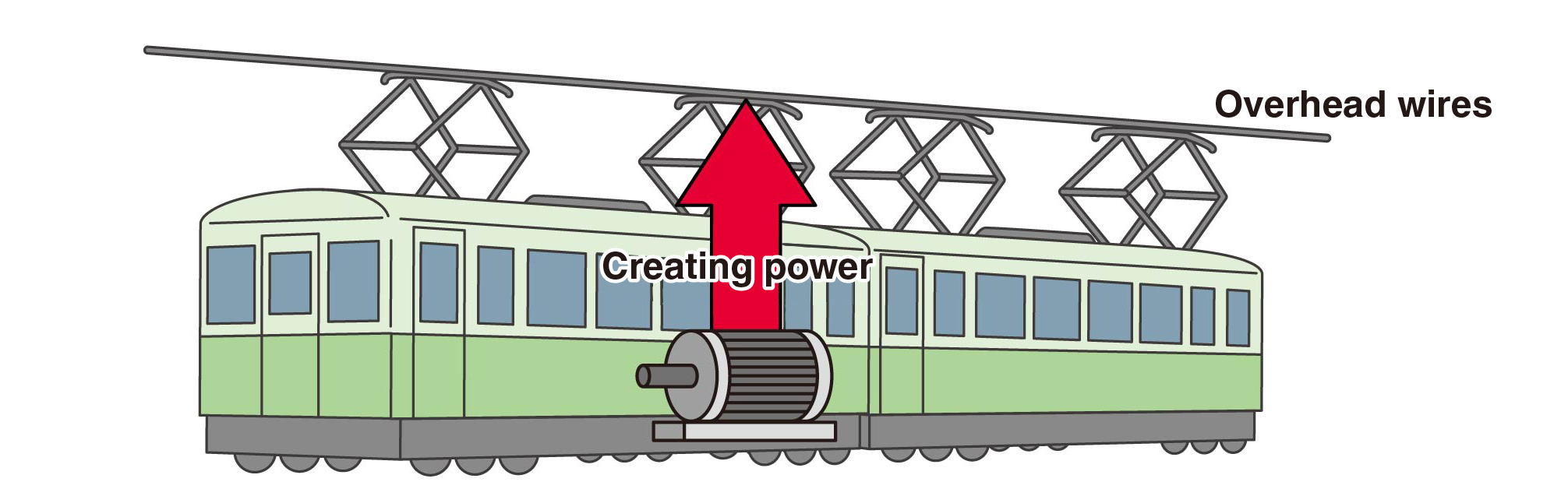
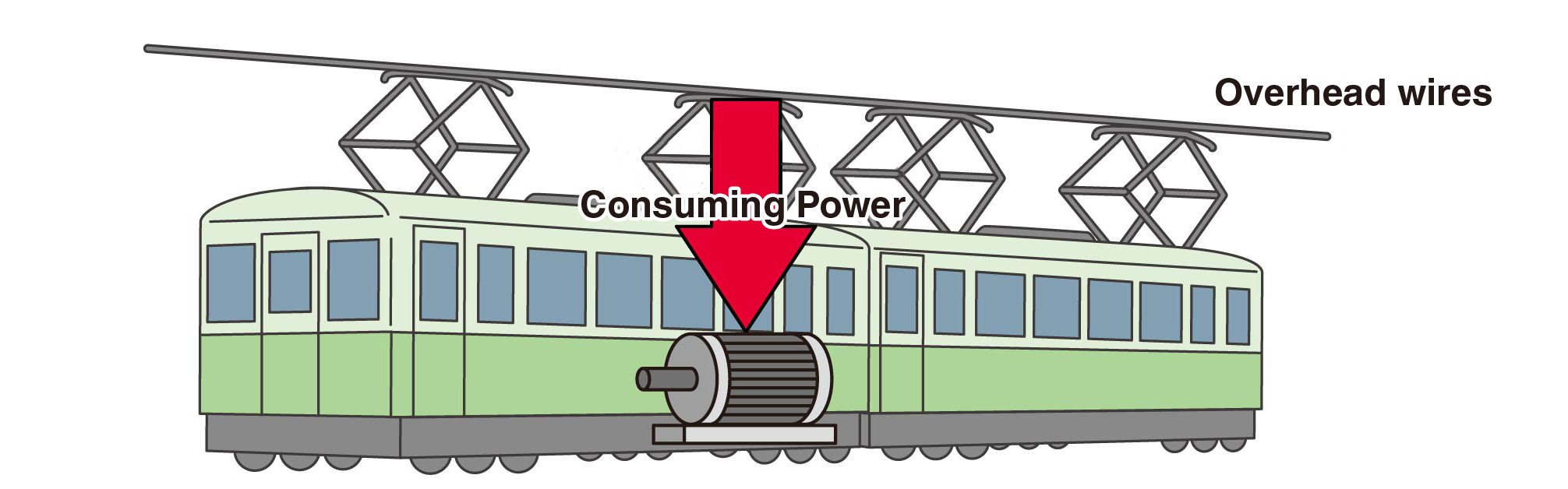
Railway systems are a classic example of regenerative energy in action. Trains typically draw DC power from overhead lines. When a train accelerates, it consumes power. However, when the train brakes, the motor acts as a generator, converting the train's kinetic energy back into electricity.
This generated power is returned to the overhead lines and can be used by other nearby trains that are accelerating. This process significantly reduces total energy consumption across the railway network.
We hope this will help you understand the basics of regenerative energy.
Regenerative Energy Features
Let's move on to "Cost efficiency" and "Longer lifetime of resistors" as one of the main features of regenerative energy.
The Benefits of Regenerative Energy: Efficiency and Cost Savings
Peak Demand Reduction (Peak Cut) Industrial machinery requires a surge of power (peak power) during startup or acceleration. By utilizing stored regenerative energy during these peak times, facilities can smooth out their power usage.
For many industrial facilities, electricity utility rates are determined by the maximum peak demand recorded over a specific period (e.g., the past year). A spike in power usage--even for a short time--can significantly increase the basic monthly electricity rate. By using regenerative energy to suppress these peaks, companies can achieve substantial cost reductions in their utility bills.
Extending Component Lifespan
In conventional systems (like cranes or elevators), heat generated during braking is dissipated by resistors. This thermal stress can degrade the resistors over time, requiring frequent maintenance or replacement. Regenerative systems route this energy back to the power supply or battery, reducing the load on braking resistors and extending their operational life.
Bidirectional Power Supplies with Regenerative Functions
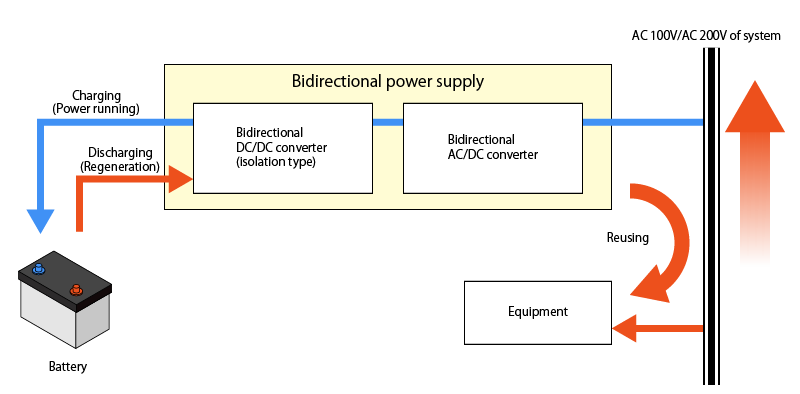
To effectively utilize regenerative energy in testing and simulation, a bidirectional DC power supply is essential. These units can both source power (output to the load) and sink power (absorb from the load), handling the energy flow seamlessly.
- Sourcing: The power supply converts AC grid power to DC to drive the load.
- Sinking (Regeneration): The power supply absorbs DC power from the load (e.g., a motor or battery) and converts it back to AC grid power.
Conversely, when discharging a charged battery, a DC/DC converter is used to boost the voltage to 100 V or 200 V. And, the energy is converted to AC by a bidirectional converter.
Matsusada Precision offers a wide lineup of high-performance bidirectional DC power supplies optimized for these applications. For more technical details, please refer to our article: "How to Use Bidirectional Power Supplies."
Expanding Applications of Regenerative Energy
Demand for energy-saving systems is driving the adoption of regenerative technology across various sectors:
Applications/Devices:
- Electric Vehicles (EV) and Hybrid Vehicles (HEV)
- Elevators and Escalators
- Cranes and Hoists
- Automated Warehouses and Multi-story Parking
- Industrial Manufacturing Lines
Managing Regenerative Voltage (Regeneration Cancellation) In systems connected to the power grid (like trains), if the regenerative energy exceeds the consumption of nearby loads, the voltage on the overhead lines may rise excessively. To protect the system, safety mechanisms may stop the regeneration process. This is known as regeneration cancellation (or regeneration invalidation), which forces the system to revert to mechanical braking or thermal dissipation.
To prevent this waste, regenerative inverters or storage battery systems are used to capture the surplus energy or convert it for use in station facilities, ensuring no energy is wasted.
The Future of Sustainable Manufacturing
In modern factories, bidirectional power supplies allow regenerative energy from one process (e.g., lowering a crane load) to be immediately reused by another process requiring power. This creates a highly efficient internal energy ecosystem.
Furthermore, combining regenerative capabilities with battery storage systems strengthens Business Continuity Planning (BCP). This approach not only promotes sustainability and carbon footprint reduction but also ensures critical systems can continue to operate efficiently, even during power instability. Matsusada Precision remains committed to developing power supply technologies that support a sustainable, energy-efficient future.
Related Technical Articles
Recommended products
Matsusada Precision manufactures bi-directional DC power supplies that can regenerate power in factories.


