


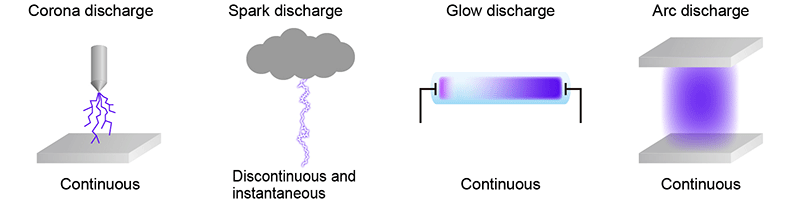
Arc discharge, also known as an electric arc, is a type of electrical discharge characterized by high current density and a relatively low voltage drop across the arc. It creates a luminous plasma bridge between two electrodes and is self-sustaining.
Types of Arc Discharge
Arc discharges are generally classified based on the electron emission mechanism of the cathode:
- Hot Cathode Arc: The cathode is heated to a high temperature, sustaining the arc through thermionic emission. This method is commonly used in discharge lamps (such as fluorescent, xenon, and mercury lamps), thermal plasma generation, and plasma torches.
- Cold Cathode Arc: Electrons are emitted via a high electric field (field electron emission) rather than heat. It is crucial to distinguish this from glow discharge, which operates at lower currents and is used in Cold Cathode Fluorescent Lamps (CCFLs).
Applications and Risks in Power Supplies
While arc discharge is utilized productively in applications like arc welding, electrical discharge machining (EDM), and lighting, it presents significant challenges in high-voltage electronics. In high-voltage power supply systems, unintended arc discharge (often caused by insulation breakdown or debris) can damage sensitive components and the power supply itself.
Matsusada Precision provides high-performance high-voltage power supplies engineered with advanced arc protection circuitry. These systems are designed to detect and manage arcing events--either by safely extinguishing the arc or by sustaining stable power for arc-based processes--ensuring reliability in demanding industrial and research environments.
Related Technical Articles
- What is a Power Supply? Types and Applications
- What is a Power Supply? (Basic Knowledge)
- Safety and Usage of High Voltage Power Supply
- An Introduction to DC Power Supplies
- What is a Bipolar Power Supply? (Basic Knowledge)
- Electronic Loads: An Introduction to Principles, Types, and Uses
- What is an AC Power Source? - Basic Knowledge -
- Linear vs. Switching Power Supplies: Key Differences Explained
- Types of X-ray Tubes and High-voltage Power Supplies
- High Voltage Measurement Method
- How to Choose a DC Power Supply: Key Points to Consider
- Difference between DC power and AC power
- A Beginner's Guide to Using Power Supplies Safely
- A Guide to Using DC Power Supplies Correctly and Safely
- HVPS for Lab Analyzers: Key Considerations for Stability and Noise
- Amplifier Basics: Principles, Operation, and Key Considerations
- Method of Generating Direct Current (DC) Power