


Electromagnetic Compatibility (EMC) refers to the ability of an electronic device or system to function satisfactorily in its electromagnetic environment without introducing intolerable electromagnetic disturbances to other devices in that environment.
For instance, a household microwave oven can sometimes disrupt wireless LAN or Bluetooth connections. This occurs because the microwave emits electromagnetic waves that interfere with the communication signals of other devices. Similarly, using a vacuum cleaner or hair dryer near a television may cause noise or display disruption.
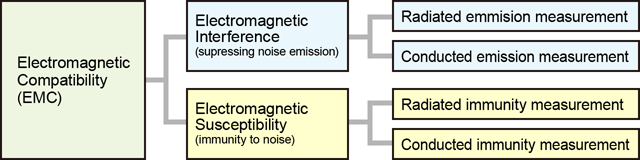
EMC compliance ensures that various electronic devices can operate simultaneously in close proximity without causing or suffering from performance degradation. It comprises two key aspects:
- Electromagnetic Interference (EMI) / Emissions: This refers to the electromagnetic noise generated by a device. To ensure EMC, a device must limit its emissions so that it does not interfere with other nearby equipment.
- Electromagnetic Susceptibility (EMS) / Immunity: This refers to the ability of a device to function correctly even when exposed to electromagnetic noise from external sources. "Susceptibility" describes the tendency to be affected by noise, while "Immunity" describes the ability to resist it.
With the increasing density of electronic devices and wireless systems in industrial and research environments, ensuring EMC is critical for maintaining system reliability and safety.
Related Technical Articles
- What is a Power Supply? Types and Applications
- What is a Power Supply? (Basic Knowledge)
- Safety and Usage of High Voltage Power Supply
- An Introduction to DC Power Supplies
- What is a Bipolar Power Supply? (Basic Knowledge)
- Electronic Loads: An Introduction to Principles, Types, and Uses
- What is an AC Power Source? - Basic Knowledge -
- Linear vs. Switching Power Supplies: Key Differences Explained
- Types of X-ray Tubes and High-voltage Power Supplies
- High Voltage Measurement Method
- How to Choose a DC Power Supply: Key Points to Consider
- Difference between DC power and AC power
- A Beginner's Guide to Using Power Supplies Safely
- A Guide to Using DC Power Supplies Correctly and Safely
- HVPS for Lab Analyzers: Key Considerations for Stability and Noise
- Amplifier Basics: Principles, Operation, and Key Considerations
- Method of Generating Direct Current (DC) Power