

Impedance (represented by the symbol Z) is the measure of the total opposition to current flow in an alternating current (AC) circuit. It is measured in ohms (Ω), the same unit used for electrical resistance.
While resistance typically remains constant in Direct Current (DC) circuits, impedance in AC circuits is frequency-dependent. Impedance is the vector sum of two primary components:
- Resistance (R): The opposition to current flow arising from resistive components. Ideally, this value is independent of frequency.
- Reactance (X): The opposition to current found in inductors (coils) and capacitors. This value changes according to the frequency of the AC signal.
Reactance is further divided based on the component:
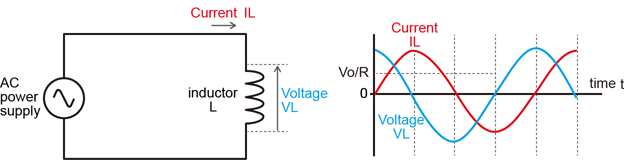
- Inductive Reactance: Found in inductors. As frequency increases, the opposition to current flow increases.
- Capacitive Reactance: Found in capacitors. As frequency increases, the opposition to current flow decreases.
In power supply applications, understanding impedance--particularly output impedance--is crucial for ensuring stable performance and fast transient response across varying load conditions.
Related Technical Articles
- What is a Power Supply? Types and Applications
- What is a Power Supply? (Basic Knowledge)
- Safety and Usage of High Voltage Power Supply
- An Introduction to DC Power Supplies
- What is a Bipolar Power Supply? (Basic Knowledge)
- Electronic Loads: An Introduction to Principles, Types, and Uses
- What is an AC Power Source? - Basic Knowledge -
- Linear vs. Switching Power Supplies: Key Differences Explained
- Types of X-ray Tubes and High-voltage Power Supplies
- High Voltage Measurement Method
- How to Choose a DC Power Supply: Key Points to Consider
- Difference between DC power and AC power
- A Beginner's Guide to Using Power Supplies Safely
- A Guide to Using DC Power Supplies Correctly and Safely
- HVPS for Lab Analyzers: Key Considerations for Stability and Noise
- Amplifier Basics: Principles, Operation, and Key Considerations
- Method of Generating Direct Current (DC) Power